
Grain Salad · Mediterranean-inspired
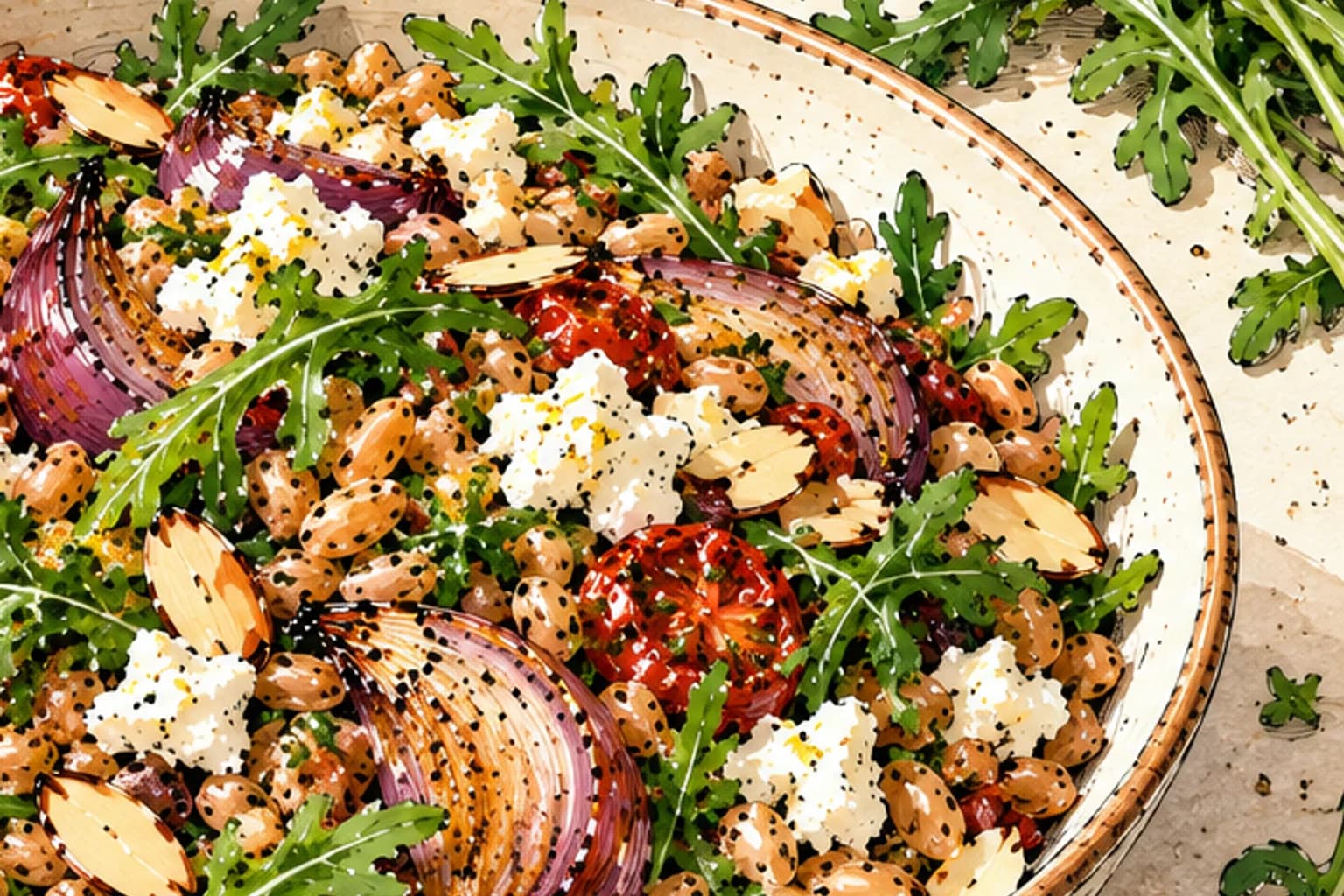
Mediterranean Farro Salad with Roasted Onion, Arugula, and Feta
A warm-dressed farro salad with roasted red onion, arugula, feta, and toasted almonds — built around the one timing detail (dressing the grain while it's still hot) that actually seasons a grain salad all the way through, not just on top.
- Prep
- 20 min
- Cook
- 30 min
- Total
- 60 min
- Servings
- 4 (as a light main; stretches to 6-8 as a side dish)
For the dressing
- 5 tbsp / 75ml extra-virgin olive oil
- 3 tbsp / 45ml fresh lemon juice
- 1 tsp, finely grated lemon zest
- 1 tsp / 5g Dijon mustard
- 1 small clove garlic, finely grated
- ½ tsp, plus more to taste fine sea salt
- freshly ground, to taste black pepper
For the salad
- 1 cup / 200g semi-pearled farro, rinsed
- 1 medium red onion, cut into thin wedges
- 1 tbsp / 15ml olive oil, for roasting the onion
- 3 cup / 60g baby arugula
- 0.75 cup / 100g feta, crumbled
- 0.33 cup / 35g sliced almonds, toasted
- 0.25 cup / 10g fresh mint, roughly chopped
- Heat the oven to 425°F (220°C). Toss the onion wedges with the tablespoon of olive oil and a pinch of salt, and spread them on a baking sheet. Roast for 20 minutes, turning once, until soft and browned at the edges.
- Meanwhile, bring a large pot of well-salted water to a boil. Add the farro and simmer for 25 to 30 minutes, until tender with a little bite left in the center. Drain well.
- While the farro cooks, whisk together the olive oil, lemon juice and zest, mustard, garlic, salt, and pepper.
- Tip the hot, drained farro into a large bowl and toss immediately with all but 2 tablespoons of the dressing. This is the step that matters most — do it while the farro is still steaming.
- Add the roasted onion and toss again. Let the bowl sit for at least 10 minutes so the heat comes down before the arugula goes in.
- Just before serving, fold in the arugula, feta, almonds, and mint. Taste, and add the reserved dressing if the salad tastes at all dry.
A grain salad usually goes wrong in one specific, boring way. Everything in the bowl can be fine — good grain, good vegetables — and it still tastes like something's missing. That's rarely a seasoning problem. It's a timing problem. The dressing went on after the farro had already cooled, and a cooled grain barely takes on anything poured over it. It just slides off, the way oil slides off a cold pan.
Why the dressing goes on while the farro's still warm
Warm farro absorbs a vinaigrette the way cold farro simply won't. Dress it while it's still hot and the vinaigrette soaks in; wait until it cools first, and the same dressing mostly sits on top instead. This is kitchen judgment rather than anything more technical — nobody needs a mechanism to know that hot food takes on flavor differently than cold food does. Make the dressing while the farro simmers, then toss most of it through as soon as it's drained — not five minutes later, not once it's "cooled a bit." Warm is the window.
Why farro, not quinoa or couscous
Farro cooks like pasta — boiled in a big pot of water until it's tender with a real bite left in the center, then drained. It won't turn to mush over a few days in the fridge the way couscous or bulgur can. Neither is boiled and drained the same way — both are soaked in a measured amount of liquid until it's fully absorbed, which leaves them softer from the start. Quinoa holds up reasonably well too, but its small grains produce a noticeably different texture once dressed — closer to wet sand than salad — and do best cooled and dried out a bit first rather than dressed straight off the heat. That's the opposite of what this recipe wants from a warm-dressed grain. Farro's own bran and germ layers are what give it that chew. Worth knowing if a box in your pantry says "pearled" instead of semi-pearled: pearled farro cooks fastest but tastes mildest. Whole farro, the least processed version, takes closest to 40 minutes. Semi-pearled, used here, splits the difference. One more thing worth knowing before you buy: farro is wheat. It's not gluten-free, and no amount of cooking changes that.
Building the bowl
The farro and the dressing are non-negotiable. Everything past that is a genuine choice, not a checklist.
Roasted red onion, not raw or quick-pickled, is the one deliberate departure here. Raw onion fights the lemon; a quick vinegar soak brightens it but keeps it sharp. Roasting does neither — twenty minutes at high heat turns the same onion sweet, so it works with the lemon instead of against it. If you want the brighter, sharper version instead, the same ten-minute vinegar soak used in the Mediterranean Dense Bean Salad works here too. It's just a different salad once you make that swap.
Arugula goes in last, and how long before serving is genuinely up to you. Toss it through while the farro still has real heat left and it wilts down into something closer to cooked spinach — pleasant, but a different texture. Add it once the bowl has mostly cooled and it stays crisp and peppery. Neither is wrong. Just don't add it straight out of the pot unless you actually want it wilted.
Feta goes in crumbled here, not cubed — it's meant to half-melt into the warm grain rather than hold its shape the way it would in a cold salad. Toasted almonds go in at the very end, always. Mixed in early, they soften in the dressing within the hour and stop doing the one thing they're there for.
Is this dinner, or a side?
As written, this feeds four as a light main, or six to eight as a side, depending on what sits next to it. Feta and almonds add enough substance for a weeknight dinner with bread on the side. For a heartier version, stir in drained chickpeas or shredded rotisserie chicken — either makes it a full dinner for four. Skip the extra protein and it's a very good side dish instead. There's no need to force it into being dinner if that's not what you need tonight.
Make-ahead and storage
The dressed farro, onion included, keeps well for up to four days, refrigerated within two hours of cooking and held at 40°F (4°C) or below. That's the same safe-storage window as any other cooked grain. Keep the arugula, feta, almonds, and mint separate until serving; all four lose something within a day mixed into the warm, dressed grain. This is also why the recipe holds back two tablespoons of dressing. Farro keeps absorbing liquid the longer it sits — dressed perfectly on day one, it can taste dry and dense by day three. The reserved dressing brings it back without redoing the whole bowl.
What to swap, what not to
Quinoa works if farro isn't available, but let it cool fully before dressing it — its texture holds up better that way than dressed straight off the heat, unlike farro. It also won't hold its texture as well past the second day. Bulgur is a different technique entirely — soaked in hot water off the heat rather than simmered, which makes it softer and quicker to absorb dressing, even cold. Treat it as a different, lighter salad rather than a direct substitute. Pepitas can stand in for the almonds for a nut-free version, with similar crunch but a slightly earthier flavor. Feta can be swapped for goat cheese, which is creamier and tangier than feta and melts further into the warm grain. Leave it out entirely for a dairy-free version — just add a touch more salt and lemon to cover what the feta was doing.
To serve
Serve it warm or at room temperature — this one doesn't mind either way. It doesn't need anything underneath it, and the roasted onion and feta already give it enough color on the plate without help.